
Independent arbitration for Protected Areas & Indigenous Territories
Book a demoReview disputed classifications involving protected areas and Indigenous territories using objective, evidence-based evaluation.
When sourcing areas overlap with protected areas or Indigenous territories, the critical question is whether farmers are authorized to operate there in accordance with applicable legal, customary, or management rules.
Meridia provides independent arbitration reports that combine geospatial analysis, legal research, and local expertise for on-the-ground approach to help companies make confident and defensible sourcing decisions.
Protect supply continuity while ensuring compliance.
The challenge
A supplier submits geolocation data.
The site is flagged as overlapping with a protected area or indigenous territory.
The importer considers the area non-compliant. The supplier disagrees, but might struggle to provide evidence supporting their position.
Who is right?
At this stage, global datasets alone are often insufficient.
Protected area boundaries may be subject to interpretation or updates, regulations applied may have changed, local implementation may differ from national legislation, and publicly available information can be incomplete.
In some cases, agricultural cultivation may be conditionally permitted, but the applicable conditions may be unclear, unknown to one or both parties, or difficult to verify due to limited available evidence. Stakeholders frequently challenge findings, leaving companies with uncertainty in a context of high risk.
Our solution
Independent assessments backed by on-the-ground expertise
The legal status of an area, the interpretation of local regulations, the validity of supplier evidence, and the realities on the ground can vary significantly between countries and jurisdictions.
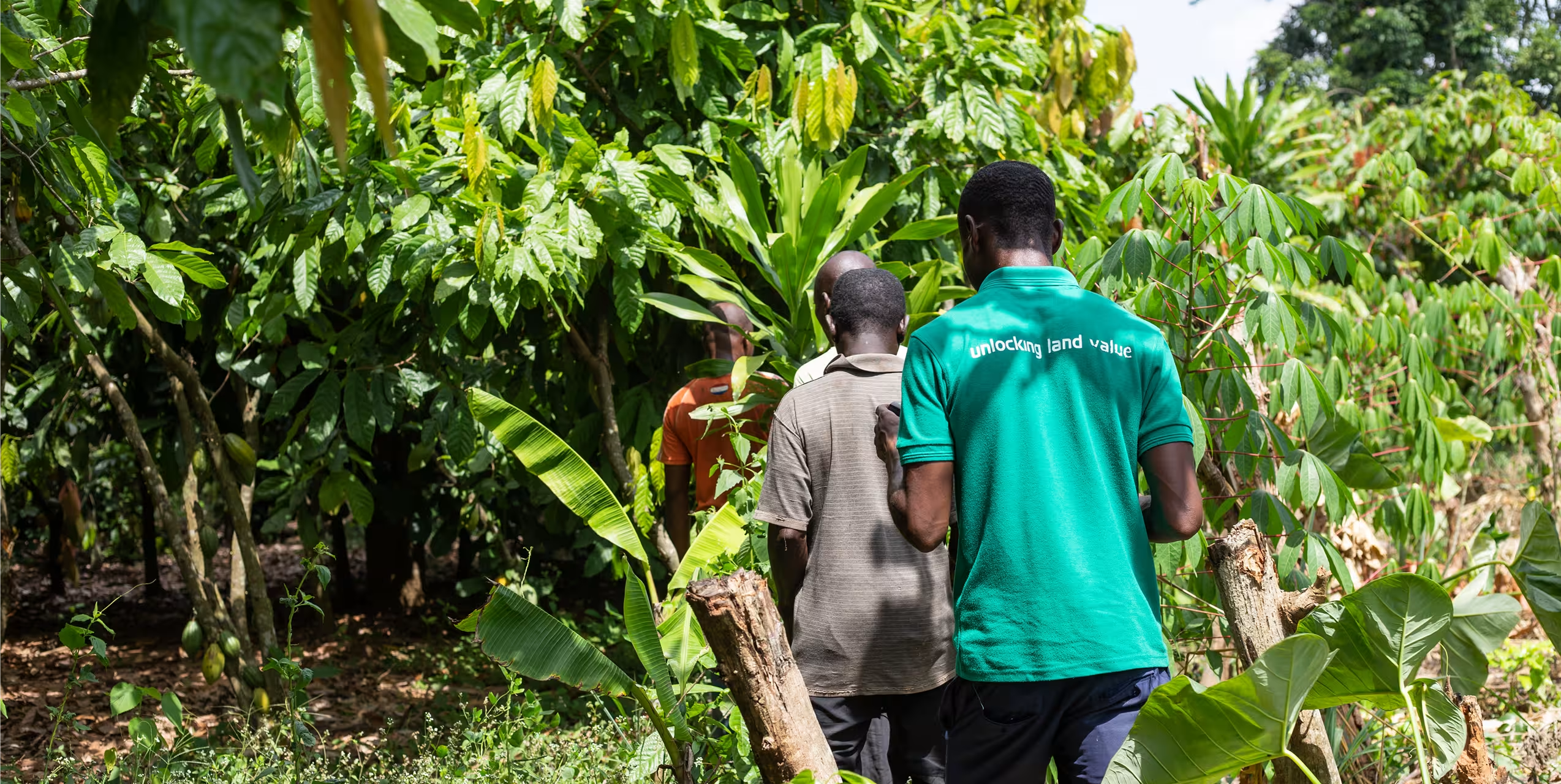
That's why Meridia works with, origin-based, national conservation experts who bring deep knowledge of protected areas, indigenous territories, legal frameworks, and local practices in their countries. Their established networks and relationships with relevant authorities and institutions help verify information, clarify interpretations, and provide access to critical local context.
These experts help investigate disputed cases, review supporting evidence, validate local interpretations, and provide critical context that global datasets alone cannot offer.
Country coverage
We currently support arbitration cases across a growing number of origin countries, with coverage available in 25+ countries and more to come.
Need support with a disputed case?
Whether you are dealing with a contested protected area finding, an indigenous territory overlap, or an inconclusive dataset result, Meridia can help you move from uncertainty to evidence-based action.
FAQs
Arbitration reports are typically used when you are sourcing plots from a protected area or indigenous territory. This might be a case where a supplier and buyer disagree about the compliance status of a site, or when available datasets and evidence do not provide a clear answer.
Examples include:
- Farm plots located in Protected areas
- Farm plots located in Indigenous territories
- Disputed legal interpretations
- Conflicting evidence from suppliers and third parties
Every case results in an independent arbitration report designed to support sourcing and compliance decisions.
Reports typically include:
- Review of applicable laws, decrees, and regulations
- Assessment of supplier-submitted evidence
- Analysis of protected area and indigenous territory status
- Validation of local interpretations and practices
- Plot-level risk assessment, where applicable
- Clear risk compliance determination
- Actionable recommendations
Arbitration reports can be delivered within 2 weeks, depending on the complexity of the case and the availability of supporting information.
Yes. Field verification can be arranged for selected cases where additional on-the-ground investigation or support is required.
Arbitration reports can provide additional evidence and context for complex protected area and indigenous territory cases, helping companies strengthen decision-making and due diligence processes. However, they are intended to support, not replace, a company's overall compliance obligations.
Yes. Our assessments cover both protected areas and indigenous territories, recognising that each may involve different legal frameworks, governance structures, and evidence requirements.