
.png)
The commitment to responsible sourcing and sustainability is at the core of our operations. Understanding and navigating protected areas is crucial for making informed sourcing decisions that align with both environmental conservation and business objectives.
The role of protected areas
Protected areas are central to global biodiversity conservation and increasingly determine how companies meet EUDR legality requirements, deforestation-free commitments and wider sustainability goals. Defined by the IUCN as clearly designated spaces managed for the long-term protection of nature, they exist to conserve ecological integrity, ecosystem services and cultural values. Today, they cover 17.6% of terrestrial land and 9.85% of marine areas, with a significant proportion overlapping territories traditionally managed by Indigenous Peoples.
Protected areas vary widely in purpose, governance and legal status. Some are designed for strict ecological preservation with minimal human activity, while others incorporate sustainable use zones where regulated agriculture or agroforestry may be compatible with conservation objectives. This diversity is why understanding local management plans and national legislation is essential: two areas with the same designation can operate under very different rules in practice.
Why protected areas matter under EUDR and voluntary commitments
Protected areas now sit at the intersection of environmental sustainability and supply-chain compliance. International frameworks, from early conventions like Ramsar and World Heritage to the Convention on Biological Diversity’s global targets, have steadily elevated their importance. The most recent global goal calls for protecting 30% of land and sea by 2030, reinforcing their relevance in both public policy and private-sector standards. These frameworks shape how companies demonstrate deforestation-free, legally compliant sourcing across their supply chains.
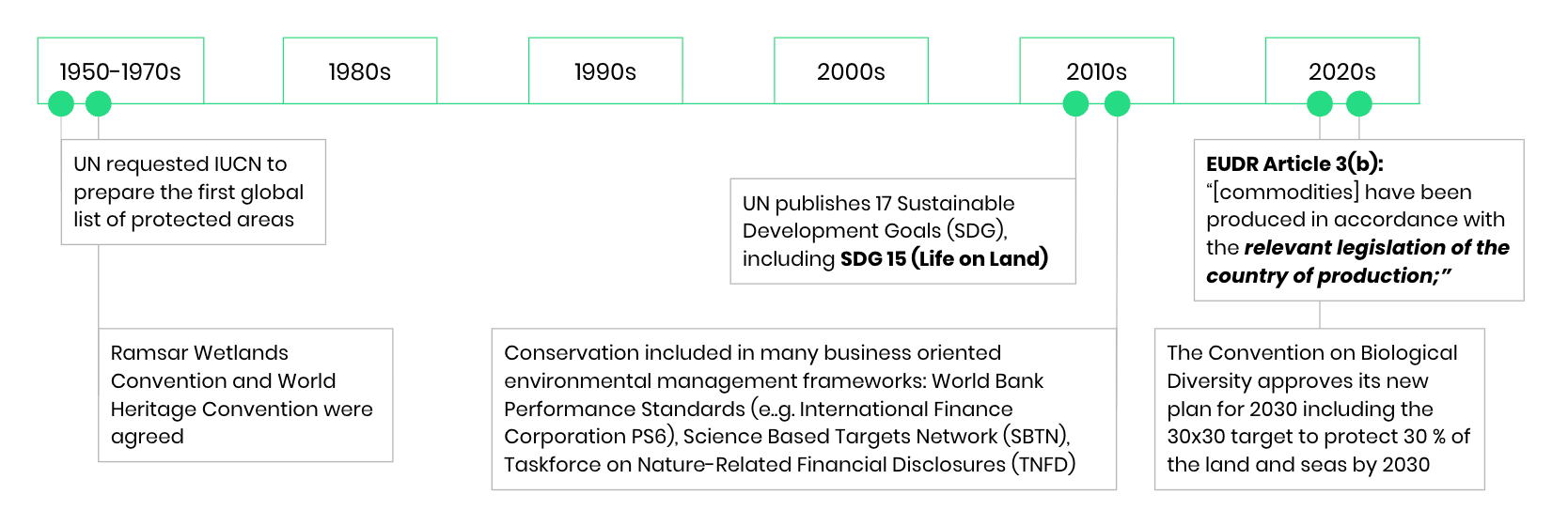
For companies, this translates into two distinct but connected expectations:
- Voluntary commitments: Many organisations align with frameworks such as the Sustainable Development Goals, IFC Performance Standards, TNFD or SBTN. These standards emphasise biodiversity protection and require transparent understanding of land-use impacts, including sourcing from or near protected areas.
- Regulatory obligations: Under the EU Deforestation Regulation (EUDR), companies must demonstrate that commodities are produced legally. This includes compliance with national laws governing protected areas, whether they prohibit agriculture entirely or allow certain activities under defined conditions.
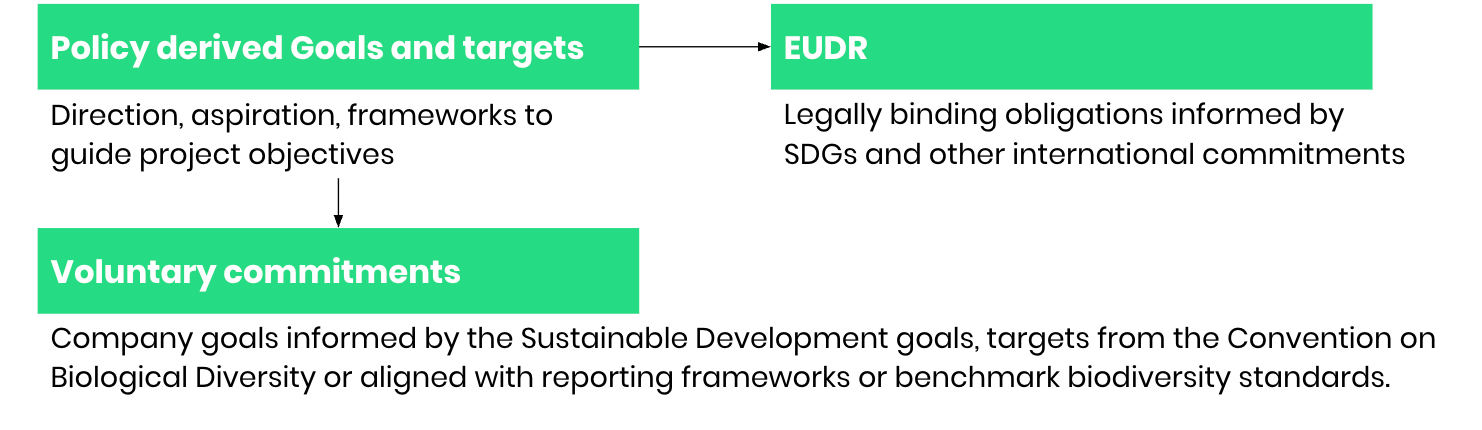
Because protected areas are legally defined at the national level, a global designation alone cannot determine whether sourcing is permitted. Understanding how each area is governed is crucial for accurate compliance decisions and for ensuring sourcing practices contribute positively to landscape-level conservation goals.
Addressing sourcing challenges
A common challenge in responsible sourcing is the assumption that any agricultural activity within a protected area is automatically non-compliant. This misconception often leads to unnecessary exclusion of suppliers, despite the fact that many protected areas allow certain forms of sustainable agriculture. Management plans and national legislation in several countries permit long-standing farming practices, particularly those led by smallholder communities, when they align with the conservation objectives of the site.
Understanding the specific regulatory framework that applies to each protected area, whether agriculture is allowed outright, allowed under certain conditions, or prohibited, is essential for risk mitigation and deforestation-free sourcing decisions. Responsible sourcing decisions require going beyond global datasets to interpret the local laws, management plans and historical land-use practices that ultimately define what is permitted on the ground.
Data for risk assessment
Understanding protected areas begins with reliable data. Meridia utilises the World Database on Protected and Conserved Areas (WDPCA) as the starting point of its protected-area compliance screening. Managed under the Protected Planet Initiative by UNEP-WCMC and IUCN, the WDPCA is the most comprehensive global database of protected areas and OECMs, containing more than 300,000 sites and updated monthly.
The challenge is interpreting it correctly within the legal and ecological context of each country. This is why Meridia combines the global dataset with local research and expert input to build assessments that reflect not only where protected areas are mapped, but how they are governed and what activities they legally permit.
Enhancing data with local insights
While global datasets show where protected areas are located, responsible sourcing decisions depend on understanding what is legally allowed within them. Protected areas differ widely in their purpose, management objectives and national legal frameworks. Some strictly prohibit any form of agriculture, while others allow sustainable practices such as agroforestry or traditional community land use.
To reflect this variation, Meridia layers national legislation, management plans and input from local land-use experts on top of the WDPCA. This ensures that each protected area is assessed not only by its mapped boundary, but by its governing rules and conservation intent.
Through this process, we identified four broad legality-risk categories for agriculture production:
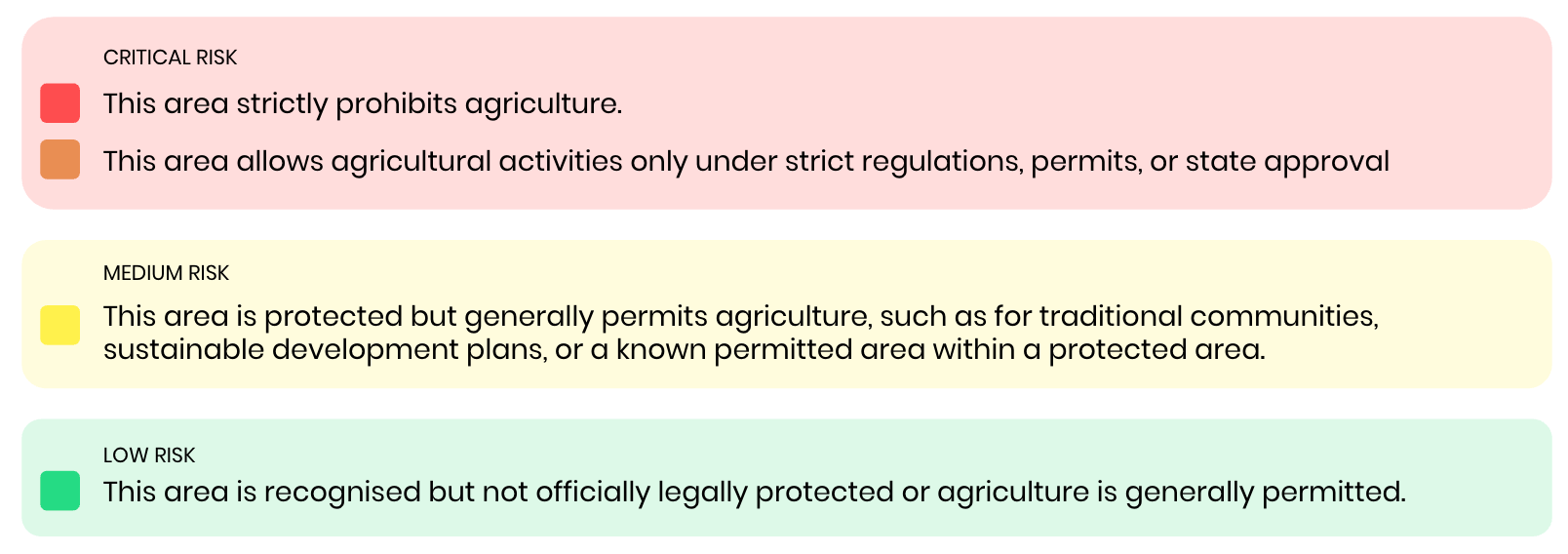
This structured approach transforms a simple overlap check into a context-based legality assessment, helping organisations understand where agriculture is clearly restricted, where it may be allowed and where further due diligence is required
Cocoa sourcing in Brazil
Brazil's cocoa production is vital for European markets, but sourcing is complicated by the presence of protected areas. Initial assessments using the WDPCA can suggest extensive non-compliance zones, which may not reflect the true regulatory landscape.
How an initial view based purely on WDPCA data differs once local context is considered.
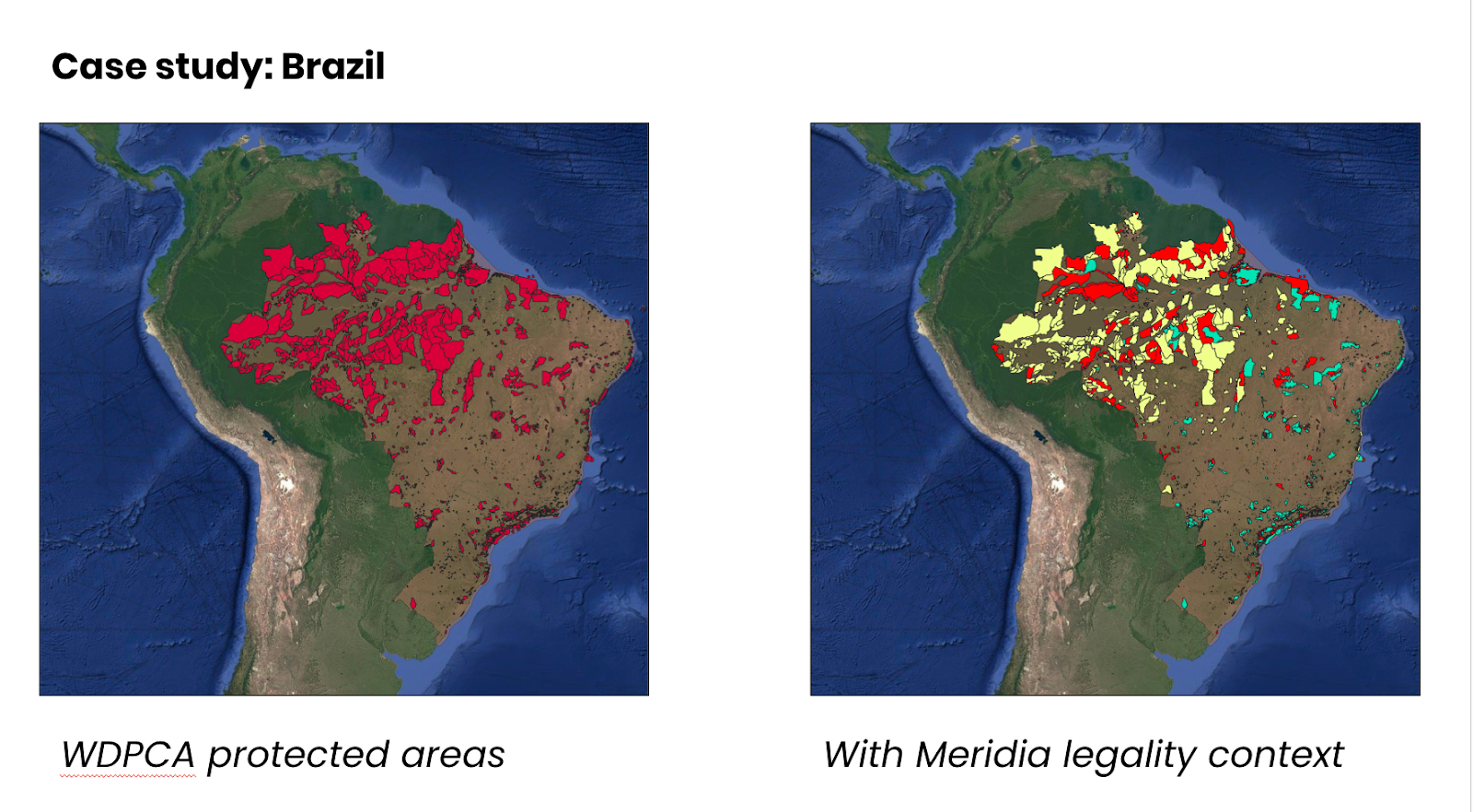
Initial vs. enhanced assessment
- WDPCA data: Initially flags large areas as high-risk for sourcing.
- Meridia's enhanced methodology: Adds legal context and local expertise, revealing that many areas permit sustainable agriculture under specific conditions.
A closer look at five cocoa plots in southern Bahia illustrates how protected-area assessments can shift once local law is considered.
All five cocoa plots sit close together, yet their legality differs. After reviewing national legislation and management plans, three plots were classified as critical risk, while two were assessed as medium risk. This shows why protected-area overlap alone cannot determine compliance.
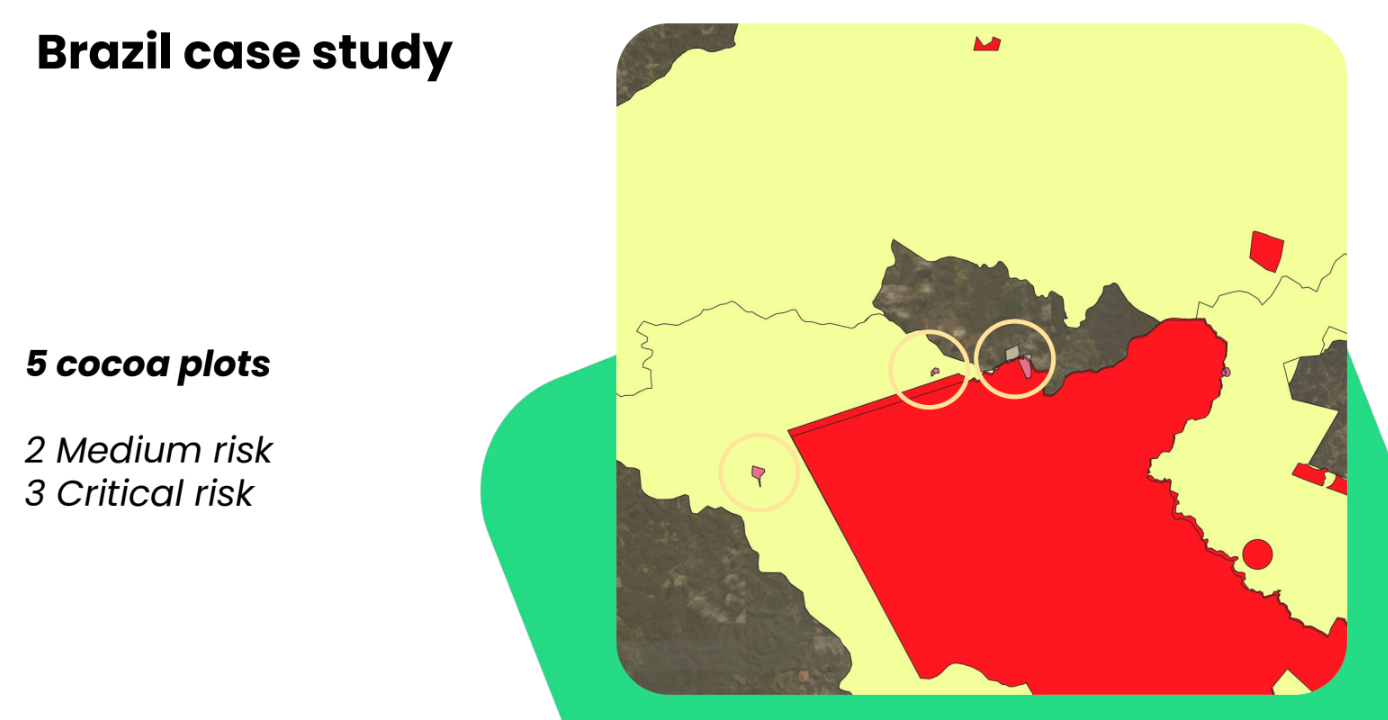
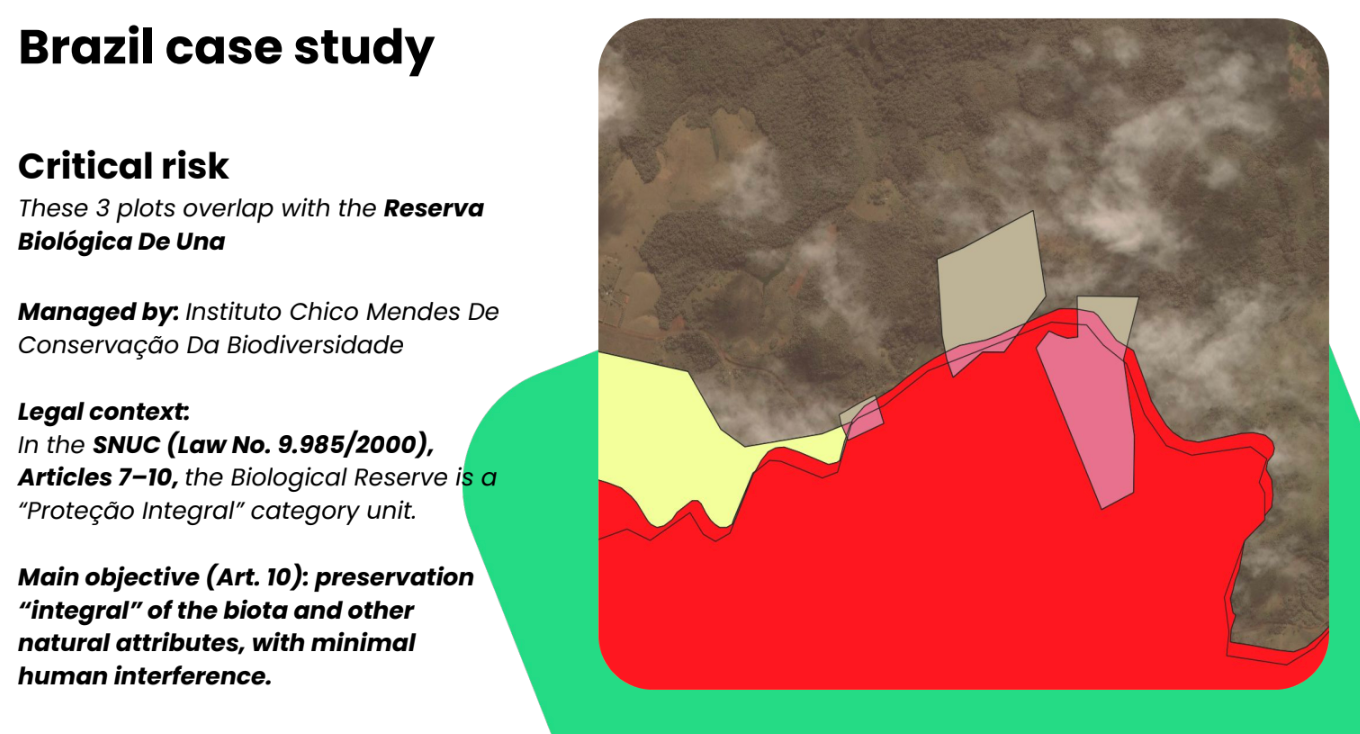
The three critical-risk plots fall inside the Reserva Biológica de Una, a strictly protected unit under Brazil’s SNUC law. Agriculture is not permitted here, as the reserve’s purpose is long-term preservation with minimal human interference.
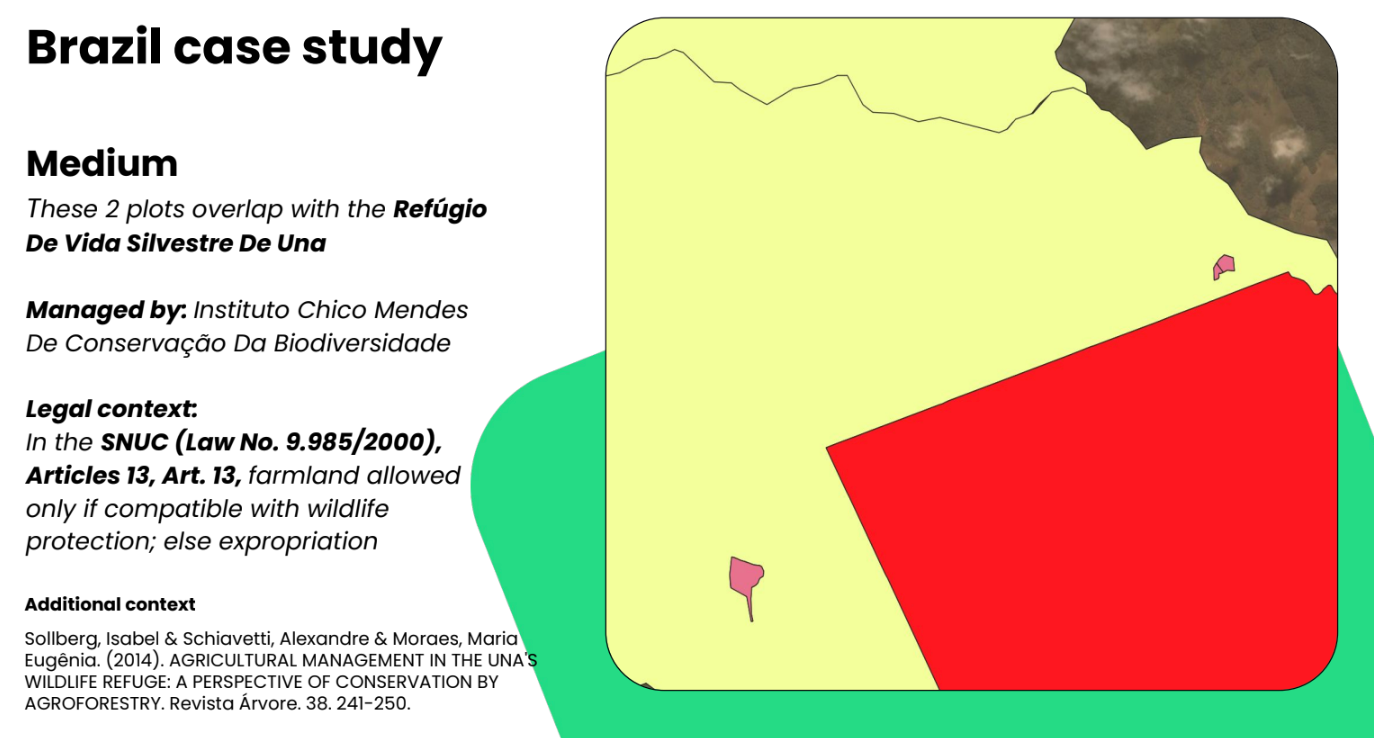
The two remaining plots overlap the Refúgio de Vida Silvestre de Una, where sustainable agriculture can be allowed if compatible with wildlife protection. Read more here. This legal context places these plots in the medium-risk category rather than prohibiting them outright.
This case study shows how neighbouring plots within the same protected landscape can have very different legality outcomes. Adding legal context to global datasets is essential for making accurate sourcing decisions and avoiding unnecessary exclusion of lawful smallholders.
Best practices for responsible sourcing
- Engage with local suppliers: Use risk assessments to support clear, constructive communication with suppliers and to clarify how local regulations apply in practice.
- Document evidence: Keep thorough records of risk assessments, contextual findings and sourcing decisions to demonstrate sound due diligence.
- Understand conservation goals: Build an understanding of the conservation objectives in the areas where you source, helping you make decisions that respect both legal and environmental priorities.
- Use arbitration services where needed: In more complex situations, draw on our network of local experts who can provide detailed insights into legality and land use.
How Verify supports responsible sourcing from protected areas
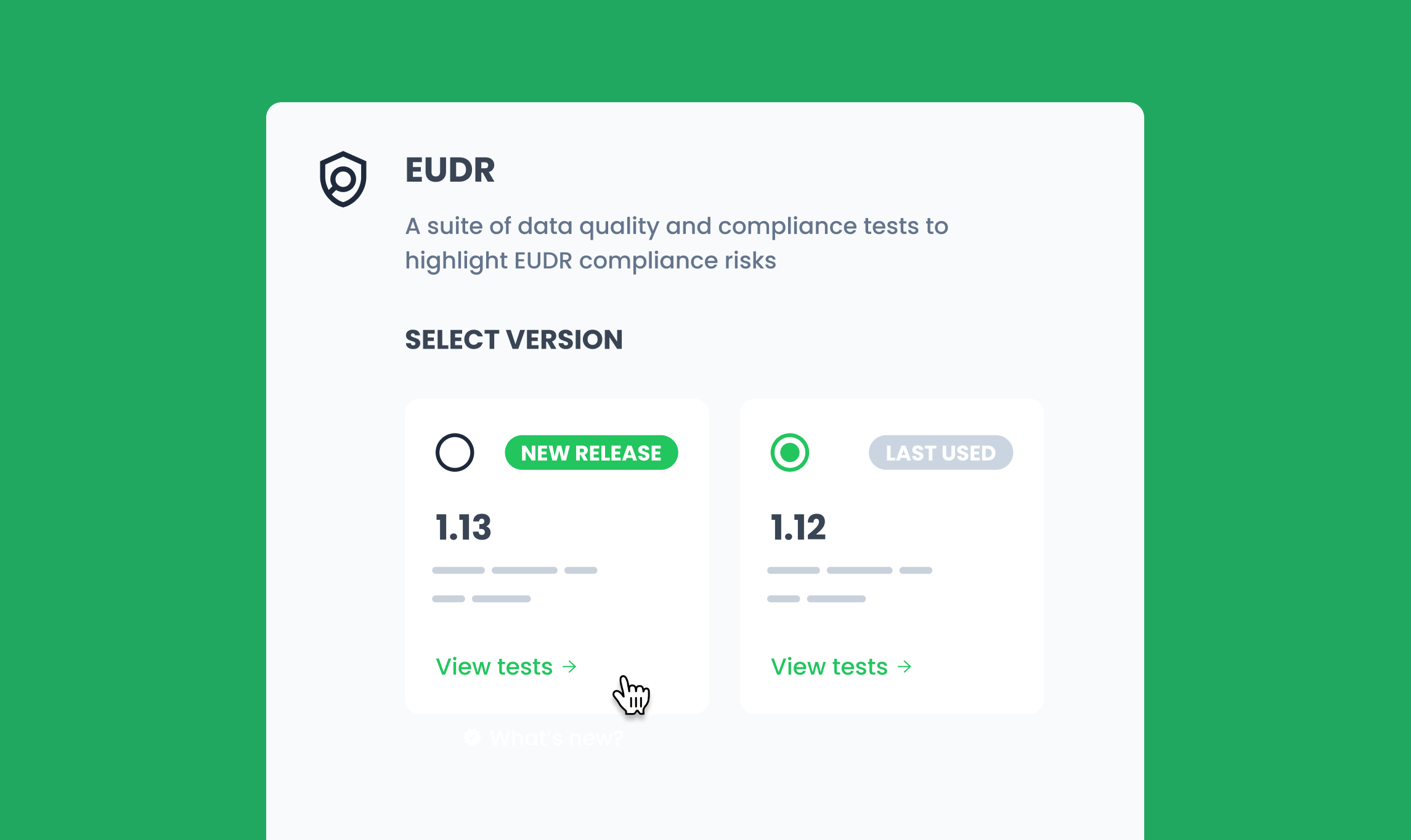
Through Verify, companies gain a clearer understanding of whether sourcing from a protected area is legally permitted and environmentally responsible. The system brings together authoritative datasets, national legislation and insights from local experts to show when agriculture is allowed, when restrictions apply and where risks are genuinely high. This helps organisations make decisions that meet regulatory requirements while supporting sustainable production in landscapes that depend on smallholder agriculture.
.png)