Why EUDR compliance requires more than data collection
The European Deforestation Regulation (EUDR) requires companies to collect detailed information about the origin of commodities, production locations, and supply chains. However, collecting data is only part of the challenge.
To demonstrate due diligence, organisations must also assess whether the information they rely on is accurate, complete, and suitable for regulatory purposes. Inaccurate farm boundaries, missing traceability records, outdated supplier information, or incorrect geolocation data can create significant compliance risks.
As a result, many organisations are implementing data verification and risk assessment processes alongside their broader EUDR compliance programmes. These processes help identify gaps in supplier data, assess deforestation and legality risks, strengthen traceability systems, and support more informed compliance decisions.
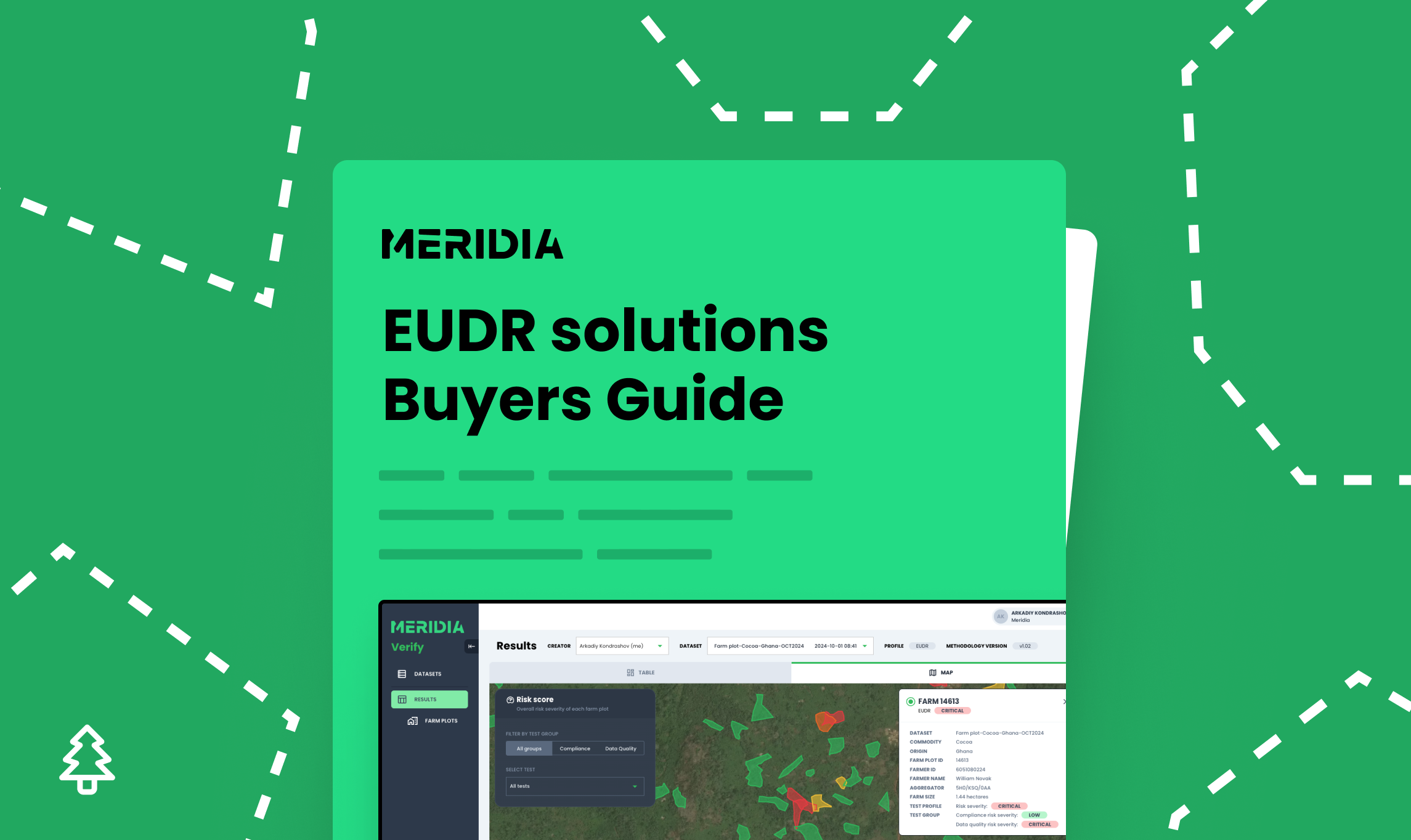
This buyer's guide explains the key capabilities companies should look for when evaluating EUDR compliance solutions and risk assessment providers.
What you'll learn in this guide
This guide provides practical insights into how organisations can assess and mitigate supply chain risks associated with EUDR compliance.
Topics covered include:
- Why data quality is a critical component of EUDR due diligence
- How deforestation risk assessments are performed using geospatial datasets
- The role of legality assessments in demonstrating compliance
- Key traceability challenges across complex supply chains
- Practical considerations when selecting an EUDR solution provider
- How data verification supports smallholder inclusion and supply chain resilience
- Questions to ask when evaluating EUDR compliance tools and platforms
After you submit your details, you will receive the guide in your inbox immediately.