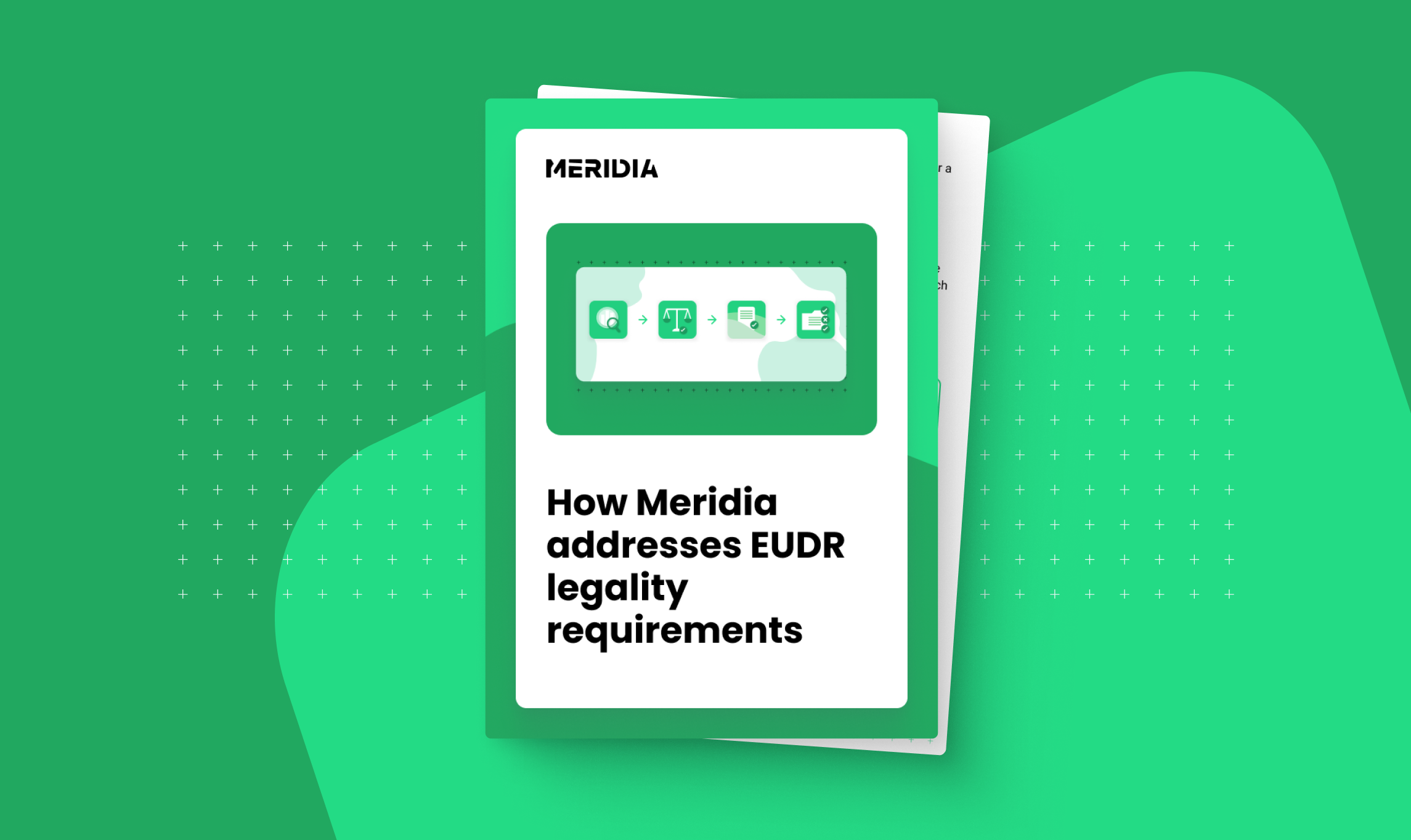
EUDR legality goes beyond deforestation.
While most EUDR compliance programmes focus on deforestation risk, legality requirements present a different challenge. There is no single dataset that can determine whether a commodity was produced legally, making legality assessment one of the most complex aspects of EUDR due diligence.
This guide explains how Meridia approaches legality assessments across four key areas:
- Land tenure rights
- Environmental law and protected areas
- Labour rights and human rights standards
- Free, Prior and Informed Consent (FPIC)
Drawing on practical experience supporting global agricultural supply chains, the guide outlines how operators can identify risks, collect evidence, and engage suppliers to support EUDR compliance.
What you'll learn
- How to assess land tenure and Indigenous Peoples' rights
- Why protected area assessments require legal context, not just map overlays
- Key considerations for human rights and labour standards due diligence
- How FPIC fits into EUDR legality requirements
- Ways to strengthen supplier engagement and evidence collection
Download the guide to learn how to build a more robust and defensible approach to EUDR legality assessments.